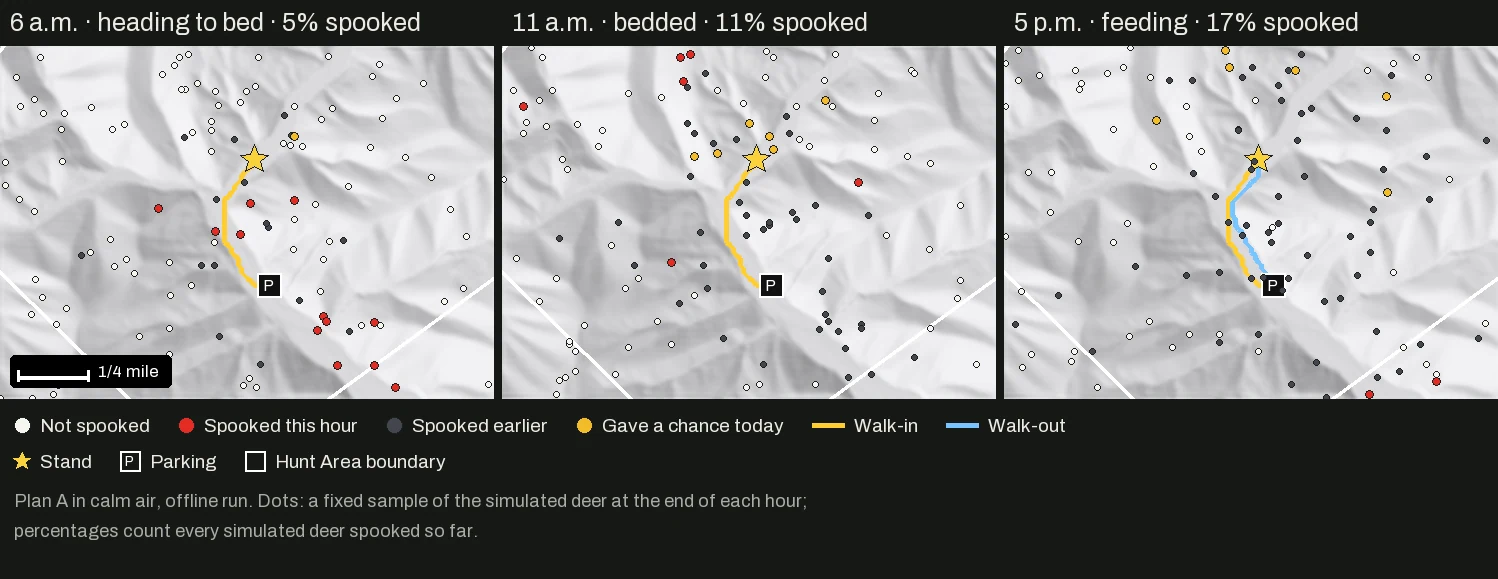
You have a stand you trust, and you have walked in to it in the dark more times than you can count. Every deer you bumped on the way in, and every deer that crossed your scent at noon, never walked past it. Reckonar counts those deer, one simulated deer at a time, across the whole hunt day.
The short version
- 01On public land at Ramseys Draft, in its likeliest wind (calm), an all-day sit spooks about five times as many simulated deer with scent as the walk-in does with noise.
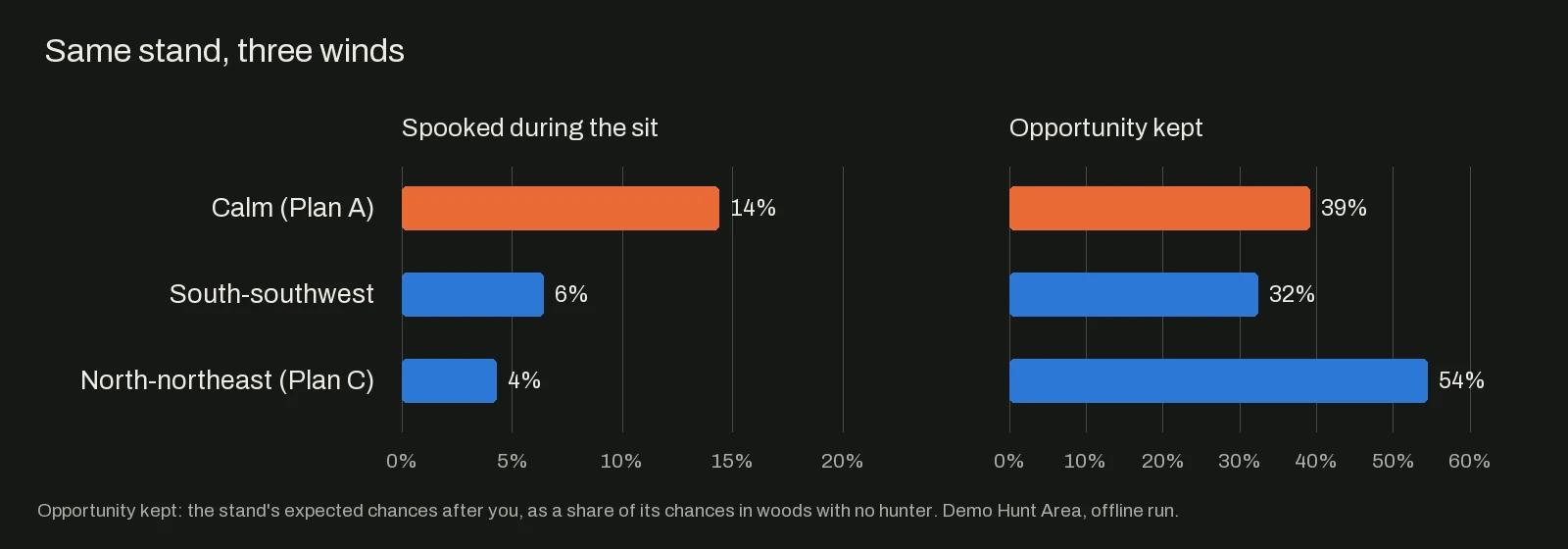
- 02Dead calm spooked the most deer during the sit at every setup in the Plan, up to four times as many as a breeze.
- 03Each likely wind gets its own Plan, with its own walk-in and scent plume.
- 04Plans are scored by the chances they keep, with the walk-in, sit and walk-out reported separately.
How a deer finds you
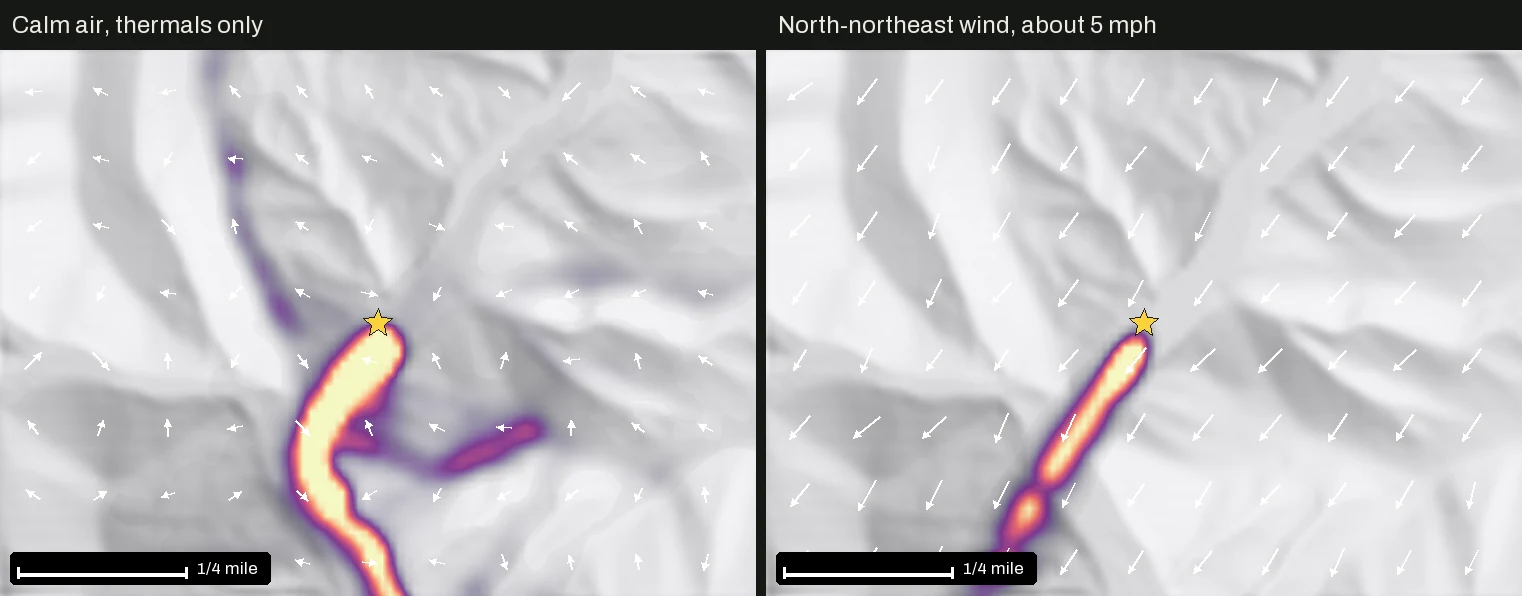
Your scent rides the wind. The regional wind bends to your terrain, faster over ridges and slower in their lee, and a Plan takes it from years of hourly NOAA weather-station records for your dates. Underneath, sun-warmed slopes pull air uphill and cooling slopes drain it back down (thermals and the sun covers that in depth). Reckonar follows your scent from the walk-in and the stand all day and reads it at a deer’s nose height.
Sight matters most when you move in daylight, since a hunter sitting still on stand is hard to pick out. Walking noise carries, and on a dark walk-in it is the main way the model’s deer notice you.
A day of deer, one at a time
Reckonar simulates a population of individual deer, each with its own bedding, feeding and water places drawn from your habitat. They feed at night, bed after dawn and head back to feed in late afternoon. A deer that notices you is out until tomorrow, and one that passes your stand in shooting light without noticing you counts as a chance.
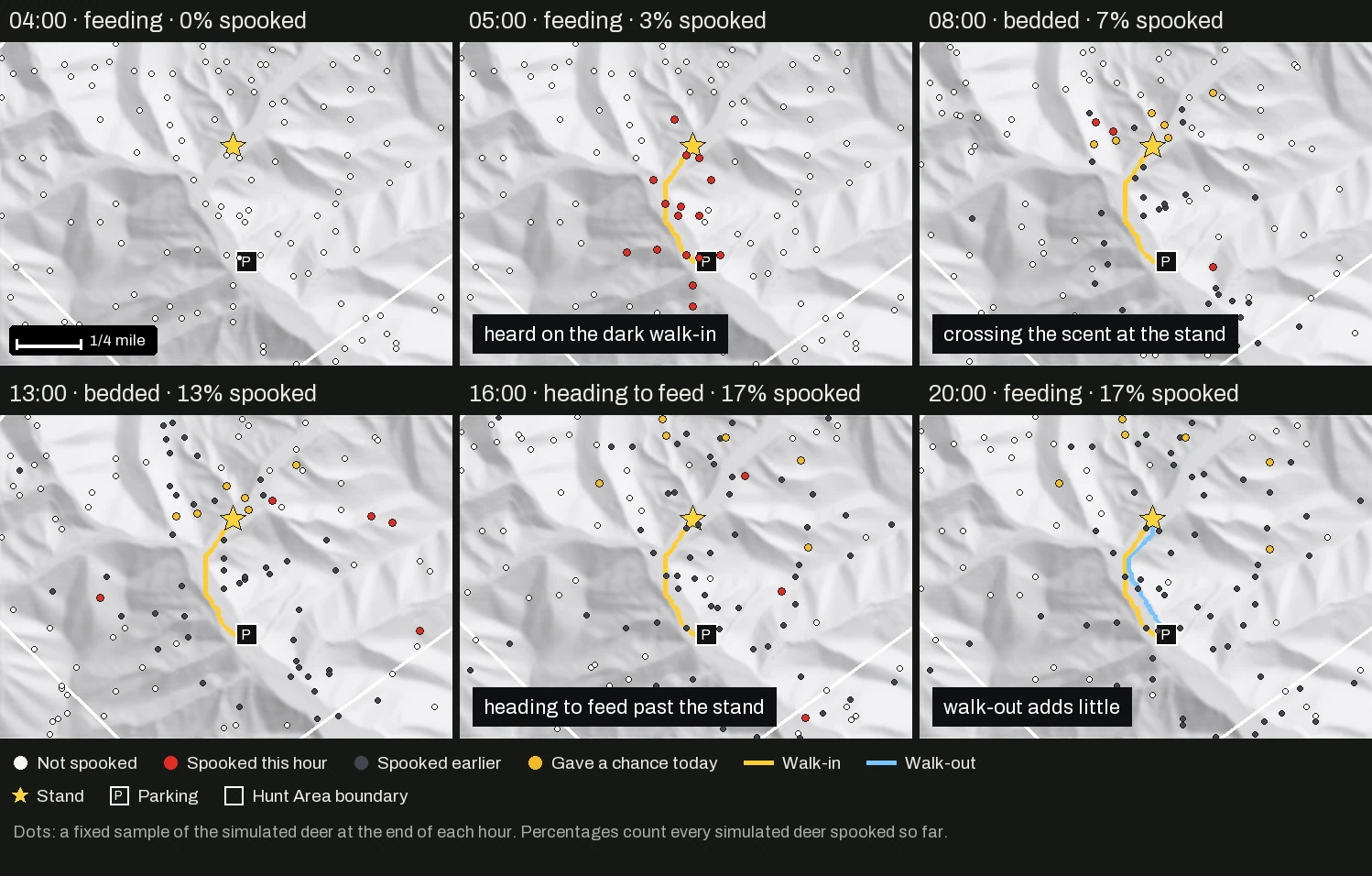
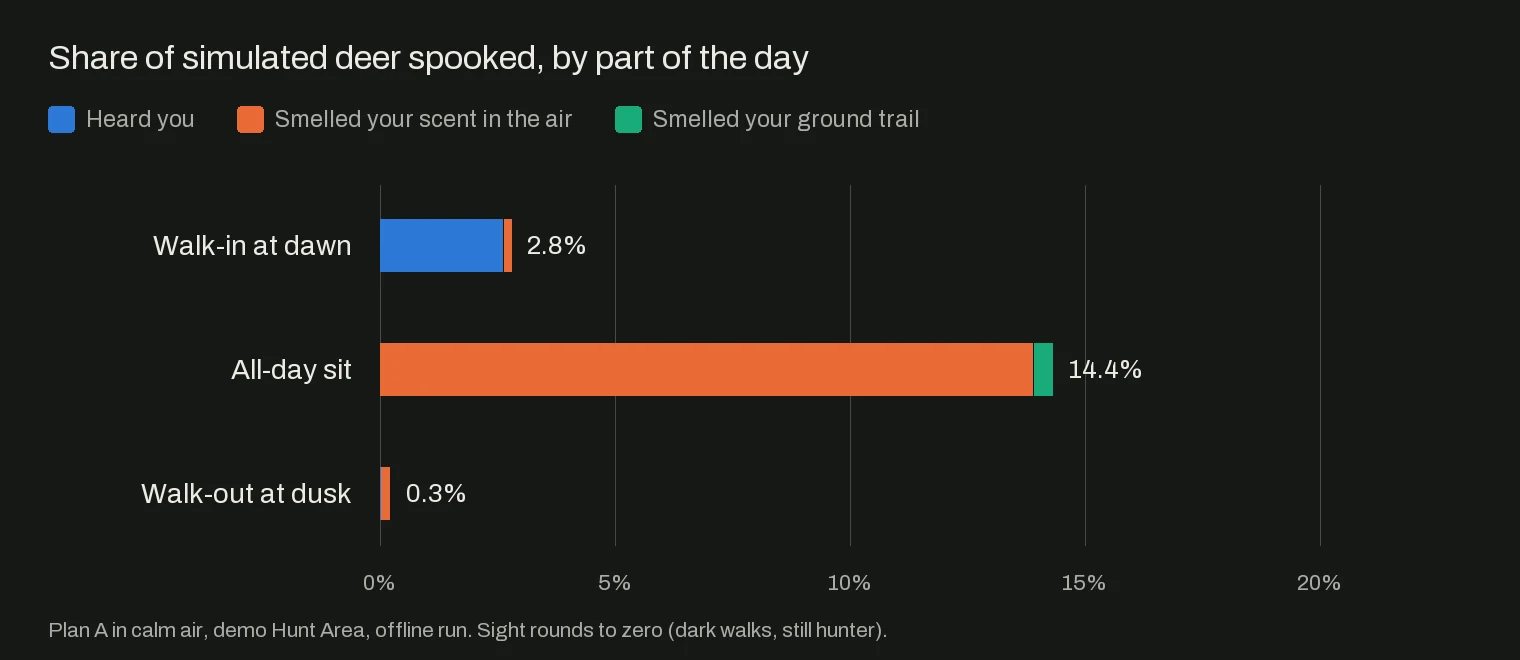
Calm at the same stand
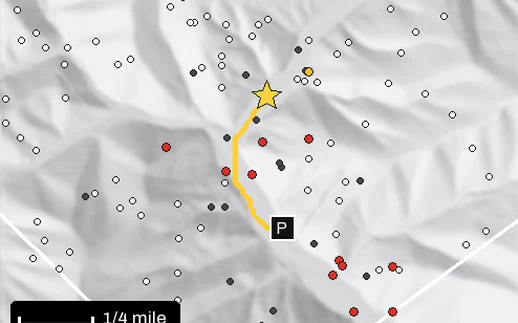
Calm feels safe, yet at Ramseys Draft it spooked the most deer during the sit at every setup in the Plan. With nothing to carry scent off one way, it lingers around the stand and reaches the deer walking toward you.
Nothing is forbidden in a Plan; crossing bedding cover just costs a lot. Reckonar picks the walk-in that loses the fewest chances and the walk-out that spooks the fewest deer still undisturbed. The walk-out is reported on its own and does not lower today’s score. A Plan says Stay out only when even its best setup keeps almost nothing in that wind.
What we don’t claim yet
- Detection ranges are field approximations rather than measurements, so read every share as a comparison between Plans.
- Shares are of simulated deer, not head counts, and Plan scores are relative indices rather than the odds of a shot.
- A spooked deer is simply out for that day; fleeing and carryover to a second day are on the backlog.
- All simulated deer keep one daily schedule, and they do not alarm each other or rut.
- Sight uses the cover between deer and hunter rather than a full sightline, and hearing ignores weather for now.
- Wind, thermals and scent pass our behavior tests, but they do not yet match field measurements closely enough for us to call them validated.
- The hour-by-hour deer view is a review tool and is not in the app yet.
Where to find it in Reckonar
In Field, choose Plan a Hunt and generate a Fast sketch or a Deep Plan; saved stands are included automatically. Mount it from Content → Saved Plans and pick a wind in the Plan tray, where Plan A to E cover the likeliest winds. Selected Plan details shows Opportunity kept and the spooked shares for the walk-in, sit and walk-out, and Your stands shows how your own stands fared. The Scent layer draws the modeled plumes. Scent Point and Ethical Shot in Tools are Coming soon. Ask Reckonar can explain why one Plan beat another.
Plans are built before you go and stay frozen in the woods, and the deer in them are simulated; nothing here tracks a real animal.